 Collage: Jemeria Davison; Source images: Courtesy of brandsSave this storySave this story
The best retinol creams can be skin-care godsends, whether you’re struggling with acne, fine lines, dark spots, drooping, dullness, or large pores. If you’re not hip to retinoids—the catchall term that refers to all vitamin A derivatives, including retinol—we’ll give you a crash course. "[Retinol] can help stimulate cell turnover as well as help stimulate collagen production," Ron Robinson, a New York City-based cosmetic chemist and founder of BeautyStat, previously told Allure. This allows the active ingredient to unclog pores, minimize the look of wrinkles, and improve your skin’s elasticity all at once. In other words, adding retinol can be a smart way to give your skin-care routine a boost—helping with common goals like smoother texture and a more even tone.
Not sure whether to grab a cream or a serum? Think of serums as the more potent, fast-absorbing option, while creams provide an extra hit of moisture and tend to play nicely with sensitive skin. It really just depends on what your skin can handle (and what it needs most).”
Our Top Retinol Creams
- Best Overall: Alastin Skincare Renewal Retinol 0.25, $81
- Best Retinal: Eau Thermale Avène RetrinAL 0.1 Intensive Cream, $68
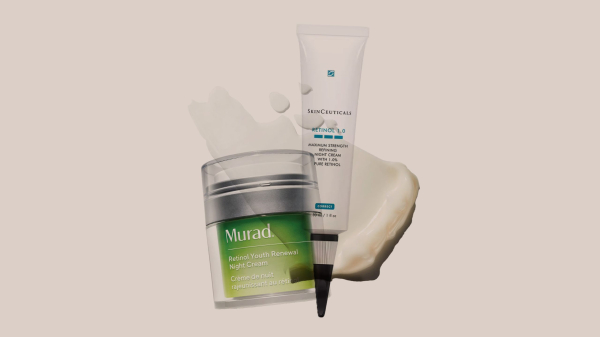
- Best for Advanced Users: SkinCeuticals Retinol 1.0, $102
- Best Night Cream: Revision Skincare D·E·J Night Face Cream, $190
Frequently Asked QuestionsLargeChevron
- What is retinol?
- How should I use retinol?
- Will retinol irritate my skin?
- What are retinol alternatives?
- Meet the experts
- How we test and review products
- Our staff and testers
Most dermatologists recommend starting with retinol just once or twice a week to help your skin build tolerance, then slowly working up to every other night or nightly as your skin adjusts. Always follow with moisturizer and wear broad-spectrum SPF daily, since retinoids can make skin more sun-sensitive. Start with one of our expert-approved favorites below.
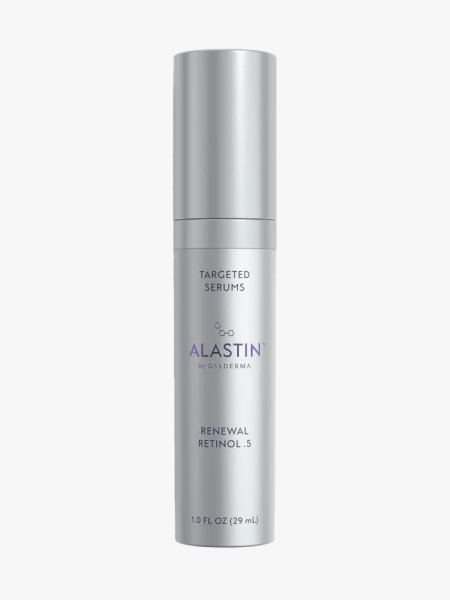
Best Overall: Alastin Skincare Renewal Retinol 0.25
 Save to wishlist
Alastin Skincare
Renewal Retinol 0.25
Amazon
Shop
Why it's worth it: What makes Alastin Skincare’s Renewal Retinol 0.25 stand out is its lipid-encapsulated form of retinol, meaning it supplements the active ingredient’s tone- and texture-evening effects with moisturizing lipids (ceramides, specifically). To double down on its soothing, no-sting claims, this retinol treatment is spiked with two skin-calming favorites: oat extract and silver mushroom, the latter of which also has hydrating properties that give hyaluronic acid a run for its money. It contains a low dose of 0.25% encapsulated retinol, but those who are advanced retinol users can opt for the higher-strength 0.5% formula.
Allure contributing commerce editor Deanna Pai applying the Alastin Skincare Renewal Retinol 0.25
Deanna Pai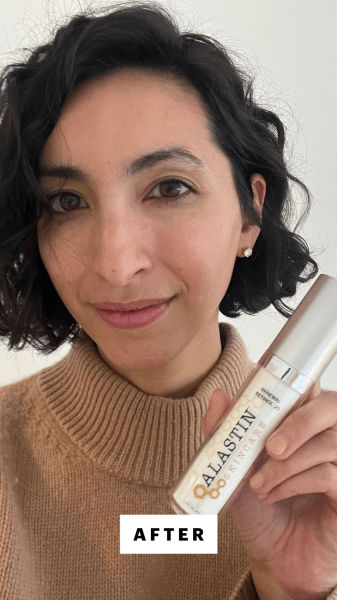
Pai after applying the Alastin Skincare Renewal Retinol 0.25
Deanna Pai
Tester feedback from contributing commerce editor Deanna Pai
LargeChevron
“I was able to use this with no acclimation period—gasp!—which is a big deal, since I’ve experienced the retinol-newbie flakes as an over-confident 20-something. It’s never once irritated my skin, even on the coldest of winter days, and while I still get the occasional hormonal breakout, I’ve found that this dispatches zits and the requisite acne scars more quickly.” —Deanna Pai, contributing commerce editor
More to know
LargeChevron
- Retinol concentration: 0.25% or 0.5%
- Other key ingredients: oat extract, ceramides, silver mushroom
- Fragrance-free: yes
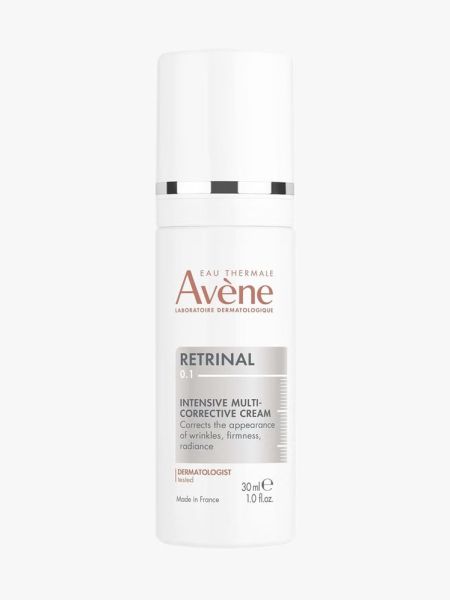
Best Retinal: Eau Thermale Avène RetrinAL 0.1 Intensive Cream
 Save to wishlist
Eau Thermale Avène
RetrinaL 0.1 Intensive Cream
Amazon
Dermstore
Ulta Beauty
Why it's worth it: ICYMI, that's retinal, with an “a”—and it's actually more potent than retinol. Eau Thermale Avène's RetrinAL 0.1 Intensive Cream contains 0.1% retinaldehyde (commonly called retinal), a vitamin A derivative that works similarly to retinol but can deliver results faster. “Retinal is one step closer to becoming retinoic acid, which is the active form that binds to receptors in your skin to stimulate collagen production and skin cell turnover,” Asmi Berry, DO, a board-certified dermatologist in Los Angeles, previously told Allure. In other words, your skin has one less step to go through, making retinal particularly effective at smoothing fine lines, improving texture, and evening out skin tone.
To help keep dryness and irritation in check, the formula pairs Avène's signature thermal spring water, known for its soothing properties, with plenty of moisturizing ingredients. Glycerin and sodium hyaluronate (a form of hyaluronic acid) draw water into the skin, while squalane, shea butter, and safflower seed oil soften skin and help seal in moisture. Niacinamide also supports the skin barrier and improves uneven tone, while antioxidant-rich vitamin E helps protect against free-radical damage. (Still, because retinal is more potent than retinol, ease into using it, especially if your skin is sensitive.)
Allure commerce editor Sarah Han applying the Eau Thermale Avène RetrinAL 0.1 Intensive Cream
Sarah Han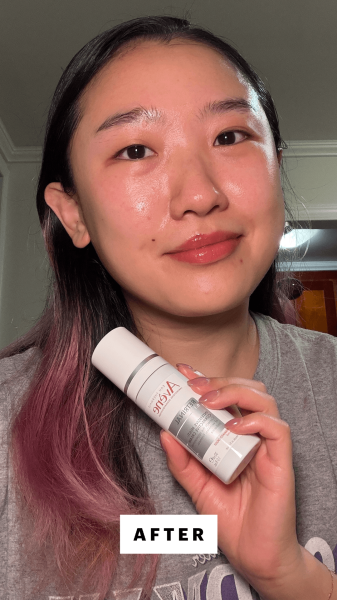
Han after applying the Eau Thermale Avène RetrinAL 0.1 Intensive Cream
Sarah Han
Tester feedback from commerce editor Sarah Han
LargeChevron
“As a 33-year-old person, I'm a retinol stan. I have yet to try prescription tret (though I'm being somewhat swayed by coworkers), so I've been experimenting with OTC retinoids up the wazoo. While I usually reach for a retinal serum, on days my skin is feeling drier or more sensitized, I'll swap my retinal for a hydrating serum and use the Avène Retrinal 0.1 Intensive Multi-Corrective Cream as a milder form of getting in my vitamin A. The cream is quite lightweight (I don't love rich creams) and blends in easily—but, most importantly, it's easy on my skin, thanks to hyaluronic acid and the brand's signature thermal spring water. It'll be an especially good winter moisturizer but, again, lightweight enough to work all year round.” —Sarah Han, commerce editor
More to know
LargeChevron
- Retinol concentration: 0.1% retinal
- Other key ingredients: vitamin E, Avène thermal spring water, glycerin, sodium hyaluronate, squalane, shea butter, safflower seed oil, niacinamide
- Fragrance-free: yes
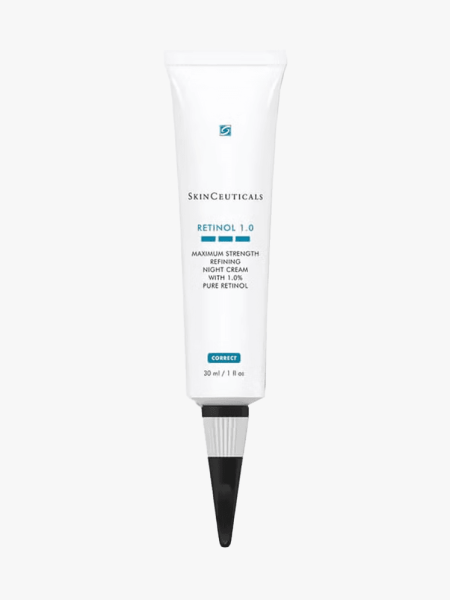
Best for Advanced Users: SkinCeuticals Retinol 1.0
 Save to wishlist
SkinCeuticals
Retinol 1.0
SkinCeuticals
Dermstore
Bluemercury
Allure contributor Marci Robin applying the SkinCeuticals Retinol 1.0
Marci Robin
Why it's worth it: While anyone (with the budget) can slather on SkinCeuticals products, those with more mature skin can benefit the most from its lineup of science-backed formulas. Case in point: Retinol 1.0, which the brand literally bills as a "retinol face cream for advanced users." This higher concentration means more effective skin cell turnover and smoother, clearer skin. To counteract any irritation or redness, there's a calming blend of bisabolol (derived from chamomile) and boswellia serrata extract (derived from frankincense).
If you’re just starting off with retinol, go with Retinol 0.3, a beginner-friendly concentration that is gentler on the skin before advancing to Retinol 0.5, and finally Retinol 1.0.
Tester feedback from contributor Marci Robin
LargeChevron
"I've been using retinol on and off for a good 15 years in my pursuit of smoother and more even skin, so I can comfortably use SkinCeuticals' highest concentration of the gold-standard cell-turner-overer (not a word, but go with it). The bisabolol in the formula definitely helps soothe any irritation, too." —Marci Robin, contributor
More to know
LargeChevron
- Retinol concentration: 0.3%, 0.5%, or 1%
- Other key ingredients: bisabolol, boswellia serrata extract
- Fragrance-free: yes
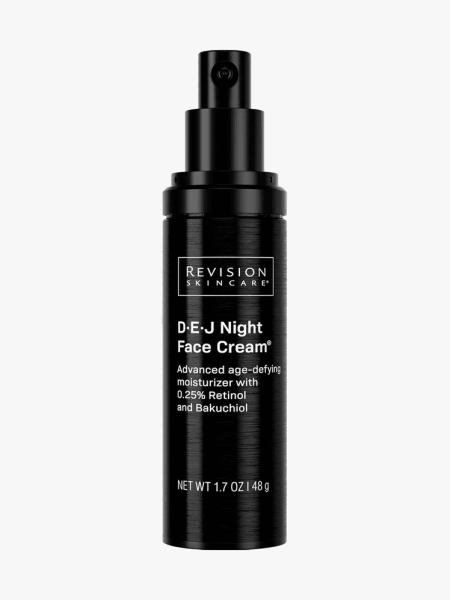
Best Night Cream: Revision Skincare D·E·J Night Face Cream
 Save to wishlist
Revision Skincare
D·E·J Night Face Cream
Amazon
Shop
Dermstore
Pai applying the Revision Skincare D·E·J Night Face Cream
Deanna Pai
Why it's worth it: Retinol and bakuchiol (a gentler, plant-based ingredient that has a similar effect on skin) are showing up together in more and more skin-care formulas, and Revision Skincare’s D·E·J Night Face Cream is a good example of why they make such a great pair. Retinol takes the lead in smoothing fine lines and uneven texture, while bakuchiol adds antioxidant and skin-smoothing benefits without necessarily increasing irritation. The cream contains 0.25% time-released retinol, making it another “approachable option for retinol beginners,” says Nazanin Saedi, MD, a board-certified dermatologist based in East Norriton, Pennsylvania. Instead of delivering all the retinol at once, the formula releases it gradually, which can help reduce the dryness, redness, and irritation that sometimes come with starting retinol.
Retinol and bakuchiol aren't the only ingredients doing your skin favors here. The night cream also contains a form of vitamin C called tetrahexyldecyl ascorbate to brighten dullness and even out skin tone, plus sodium hyaluronate and glycerin to draw in moisture. To further nourish skin, squalane, ceramides, and cholesterol support the skin barrier and help lock in hydration, reducing the likelihood of dry patches and peeling as your skin adjusts to retinol.
Tester feedback from Pai
LargeChevron
“I've recently started using this retinoid at night—having heard a million dermatologists recommend it—and so far, it cannot be beat. It doesn't cause any irritation or dryness, and is creamy enough for my combination skin that I can skip moisturizer. It's faded some of my hyperpigmentation, and while I haven't seen a difference in my fine lines just yet, I'm optimistic.” —Deanna Pai, contributing commerce editor
More to know
LargeChevron
- Retinol concentration: 0.25% time-released retinol
- Other key ingredients: bakuchiol, tetrahexyldecyl ascorbate (vitamin C), peptides, sodium hyaluronate, squalane, ceramides, cholesterol
- Fragrance-free: yes
More retinol creams we like
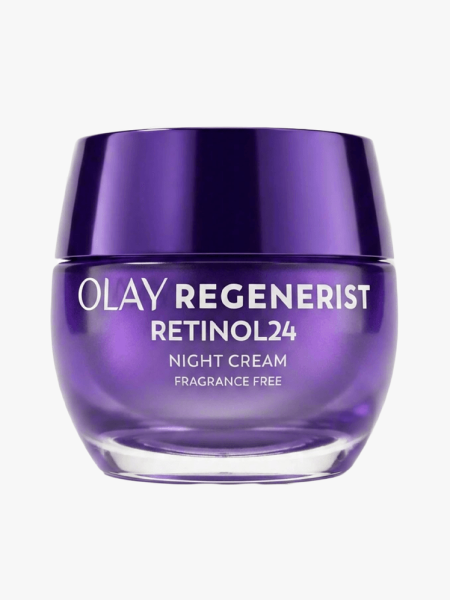
Best Drugstore: Olay Regenerist Retinol 24 + Peptide Night Face Moisturizer
 Save to wishlist
Olay
Regenerist Retinol 24 + Peptide Night Face Moisturizer
Amazon
Why it's worth it: If you're dealing with dark spots, fine lines, and uneven texture, the Olay Regenerist Retinol 24 + Peptide Night Face Moisturizer tackles all three without requiring separate products. “For discoloration and uneven tone, I prefer a night cream like this one that includes ingredients capable of supporting cell turnover rather than relying on hydration alone,” says Anetta Reszko, MD, a board-certified dermatologist based in New York City.
The formula contains two forms of vitamin A: retinol, which helps speed up skin cell turnover to gradually fade discoloration and smooth rough patches, and retinyl propionate, a retinol derivative that's generally considered gentler because it needs to go through additional steps before your skin can use it. Together, they help address uneven tone and texture, while niacinamide helps brighten and support the skin barrier. Peptides help improve the look of fine lines and firmness, and glycerin draws in moisture.
Although it's fragrance-free, the brand doesn't disclose the retinol percentage, so it's hard to know how just potent the formula is. If you're new to retinol or have sensitive skin, start with two to three nights a week and gradually work your way up to nightly use as your skin adjusts.
More to know
LargeChevron
- Retinol concentration: retinol and retinyl propionate (percentage undisclosed)
- Other key ingredients: niacinamide, peptides, glycerin, dimethicone
- Fragrance-free: yes
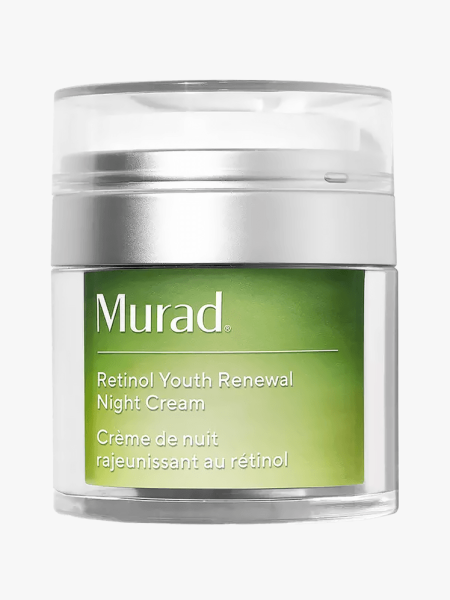
Best for Dry Skin: Murad Retinol Youth Renewal Night Cream
 Save to wishlist
Murad
Retinol Youth Renewal Night Cream
Amazon
Nordstrom
Shop
Why it's worth it: To tackle thinning, crepey skin, Murad’s Retinol Youth Renewal Night Cream doesn't rely on just one type of retinoid. It instead contains three: retinol, retinyl linoleate (a gentler vitamin A derivative), and hydroxypinacolone retinoate (a retinoid that can bind directly to retinoid receptors in the skin). Together, they help encourage skin cell turnover for smoother, more even-looking skin.
“This is one of my favorite options for patients who want visible improvement in crepey skin texture and firmness,” says Alexandra Bowles, MD, board-certified dermatologist based in Cincinnati, OH. “The formula's time-release technology also delivers retinol gradually to help minimize irritation,” she says. The cream has plenty of moisturizing ingredients to balance things out, including hyaluronic acid and glycerin to draw in water, squalane to soften skin, and niacinamide to support the skin barrier.
More to know
LargeChevron
- Retinol concentration: retinol, retinyl linoleate, hydroxypinacolone retinoate
- Other key ingredients: hyaluronic acid, glycerin, squalane, niacinamide
- Fragrance-free: no
Best for Mature Skin: Dr. Dennis Gross Intense Wrinkle Cream
 Save to wishlist
Dr. Dennis Gross
Intense Wrinkle Cream
Amazon
Nordstrom
Dermstore
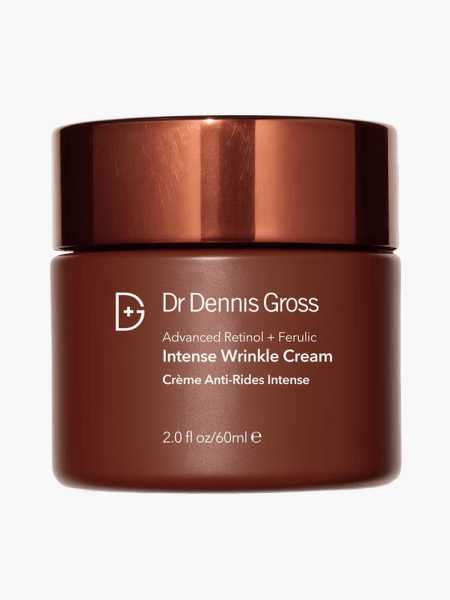
Why it's worth it: Chasing quick results? Dr. Dennis Gross’s Intense Wrinkle Cream targets fine lines, wrinkles, and uneven tone with visible improvements in as little as two weeks. Powered by the brand’s Phyto-Retinol Blend, it combines trans-retinol (the classic form your skin readily converts to retinoic acid) with encapsulated retinol that releases gradually for a gentler, less irritating boost. “It also features bakuchiol, a plant-based retinol alternative, to tackle fine lines and boost collagen for a more even tone and texture,” says Corey L. Hartman, MD, a board-certified dermatologist based in Birmingham, Alabama. The rich formula is ideal for dry or mature skin, though oily or acne-prone types may find it a bit heavy, notes Dr. Hartman.
More to know
LargeChevron
- Retinol concentration: not disclosed
- Other key ingredients: bakuchiol, ferulic acid, rambutan=
- Fragrance-free: yes
Frequently Asked Questions
What is retinol?
Retinol is a transformative skin-care ingredient also known as pure vitamin A. Retinol is a retinoid—the catch-all term for these A-based formulas, over-the-counter (OTC) and prescription varieties alike, like tretinoin. (Adapalene is the only prescription-level retinoid available over the counter—Differin Gel Adapalene Gel 0.1% is a popular option.) This active vitamin A binds to receptors, helping them function better and increasing cell turnover and collagen production. This can translate into many benefits, like more balanced pigment production for fewer dark spots, smoother skin, and tighter-looking pores.
"The increase in cell turnover helps unclog pores," Sheila Farhang, MD, a board-certified dermatologist based in Tucson, Arizona, previously explained. "This also helps decrease the appearance of brown or red post-acne spots—post-inflammatory hyperpigmentation—as well as help collagen synthesis for acne scarring," Dr. Farhang added.
How should I use retinol?
"When it comes to a retinol cream, it's important to know what percentage of retinol is included in the formula to determine if the product is actually going to deliver all the glorious benefits vitamin A has," says David Kim, MD, a board-certified dermatologist based in New York City. "Studies have shown that retinol is about 10 times less potent than prescription-strength retinoic acid, so I usually recommend products with at least 0.25% retinol."
First-time users should start by using retinol once or twice a week, gradually increasing to every other day—if your skin can handle it, you can bump up to nightly use. No matter how often you use it, you may have a brief adjustment period with some irritation, which is normal.
Over-the-counter vitamin A formulations, like those with retinol and retinaldehyde (often shortened to retinal), tend to be weaker because the skin has to convert them to retinoic acid before they can take full effect. With any retinoid, especially if you have sensitive skin, practice restraint and apply a pea-sized drop only one or two nights a week until your skin acclimates.
According to Chicago-based dermatologist Caroline Robinson, MD, it's best not to mix retinol with benzoyl peroxide. When used together, they can cancel each other out, which means neither works as well as it should. Still, you can separate them: use benzoyl peroxide in the morning and reserve retinol for nighttime. Similarly, if you want to use both vitamin C and retinol in your skin-care routine, use vitamin C during the day and retinol at night.
Other no-nos? Mixing retinol with alpha-hydroxy acids (AHAs) and beta-hydroxy acids (BHAs) will result in major irritation and barrier disruption. Dermatologists recommend alternating the days you use AHA and retinol, or replacing salicylic acid with peptides—the latter enhances the penetration of retinol.
Will retinol irritate my skin?
Everyone’s skin reacts differently to retinol, but as a guideline, New York City-based board-certified dermatologist Hadley King, MD, reminds us that some degree of irritation—like dryness, peeling, redness, flaking, and burning—can be anticipated and should subside by the fourth week. You can also buffer your retinoids with a dollop of anti-inflammatory serum or lotion—ideally, formulas spiked with niacinamide, polyphenols, lipids, and ceramides.
It’s also key to start your retinol journey with a lower-potency option. "Look for [something] like retinyl propionate, as it's much milder on the skin as compared to pure retinol," Joshua Zeichner, MD, a board-certified dermatologist based in New York City, previously told Allure. "You can think of it as an entry-level version."
What are retinol alternatives?
If you have sensitive skin, are pregnant and/or breastfeeding, or simply don't want to deal with this active's side effects (stinging, flaking, and skin purging, to name a few), you can consider the retinol alternatives explained below.
Bakuchiol
Bakuchiol is the most well-known retinol alternative out there for its gentler profile and impressive fine line-smoothing results. "Bakuchiol, like retinol, works by increasing cell turnover, thereby stimulating collagen production and diminishing wrinkles, skin laxity, and overall photo-damage," Ellen Marmur, MD, a New York City-based board-certified dermatologist, previously told Allure, without the sting commonly associated with retinoids.
Niacinamide
If discoloration is your concern, niacinamide is the antioxidant for you. "Niacinamide works with your skin's natural chemistry to improve overall skin texture by rebuilding a lipid layer, minimizing the appearance of pores, and preventing UV damage and inflammation as an antioxidant," Seattle-based board-certified dermatologist Brandith Irwin, MD, previously told Allure. Also known as vitamin B3, this powerhouse ingredient evens skin tone, minimizes redness, and reduces inflammation.
Peptides
Last but certainly not least are peptides, a must-have for diminishing the look of wrinkles and firming up sagging skin. Dr. Kim previously told Allure that peptides are designed to boost and replenish amino acids, the building blocks of collagen production. Often recommended for mature skin, peptides can help reduce the appearance of fine lines and leave skin looking tighter.
Meet the experts
- Alexandra Bowles, MD, board-certified dermatologist at MONA Dermatology based in Cincinnati, Ohio
- Sheila Farhang, MD, a board-certified dermatologist and founder of Avant Dermatology & Aesthetics, based in Tucson, Arizona
- Corey L. Hartman, MD, a board-certified dermatologist and founder of Skin Wellness Dermatology, based in Birmingham, Alabama
- Brandith Irwin, MD, a board-certified dermatologist, based in Seattle, Washington
- David Kim, MD, a board-certified dermatologist and founder of Soho Dermatology, based in New York City
- Hadley King, MD, a board-certified dermatologist, based in New York City
- Anetta Reszko, MD, a board-certified dermatologist based in New York City
- Ron Robinson, a cosmetic chemist and founder of Beauty Stat based in New York City
- Joshua Zeichner, MD, a board-certified dermatologist and director of cosmetic and clinical research in dermatology at Mount Sinai Hospital, based in New York City
How we test and review products
When Allure tests a product, our editors look at it from every angle in an effort to best serve you. We review ingredients, scrutinize brand claims, and, when necessary, examine peer-reviewed scientific and medical studies. In addition to testing each and every product that's included in each and every review, we rely on experts who shape their fields, including dermatology, cosmetic chemistry, and medicine, to help us vet the ingredients and formulas.
For our list of the best retinol creams, we considered each product's performance across five primary categories: product ingredients and efficacy, packaging, fragrance, texture, and product wear. Every product was determined to have excelled in each category by our editorial team, which is composed of in-house writers and editors as well as contributors—along with special consideration from board-certified dermatologists. To learn more information on our reporting and testing processes, read our complete reviews process and methodology page.
Our staff and testers
A beauty product is a personal purchase. You might be searching for a face cream to address persistent dryness or a new nail product to add to your Sunday self-care routine; you may simply be browsing around for the latest launches to hit the hair market. No matter what you seek or your individual needs and concerns, Allure wants to ensure that you love anything we recommend in our stories. We believe that having a diverse team of writers and editors—in addition to the wide range of outside testers and industry experts we regularly call upon—is essential to reaching that goal.
After all, can we really say a skin-care product is the "best" for people over 50 if the only testers we've solicited opinions from folks who have yet to hit 30? Can we honestly deem a high-end diffuser worthy of your hard-earned cash if it’s never been tested on curls? We're proud that our staff spans a wide range of ages, skin tones, hair textures, genders, and backgrounds, which means that we are able to fairly assess any beauty product that comes into the beauty closet.